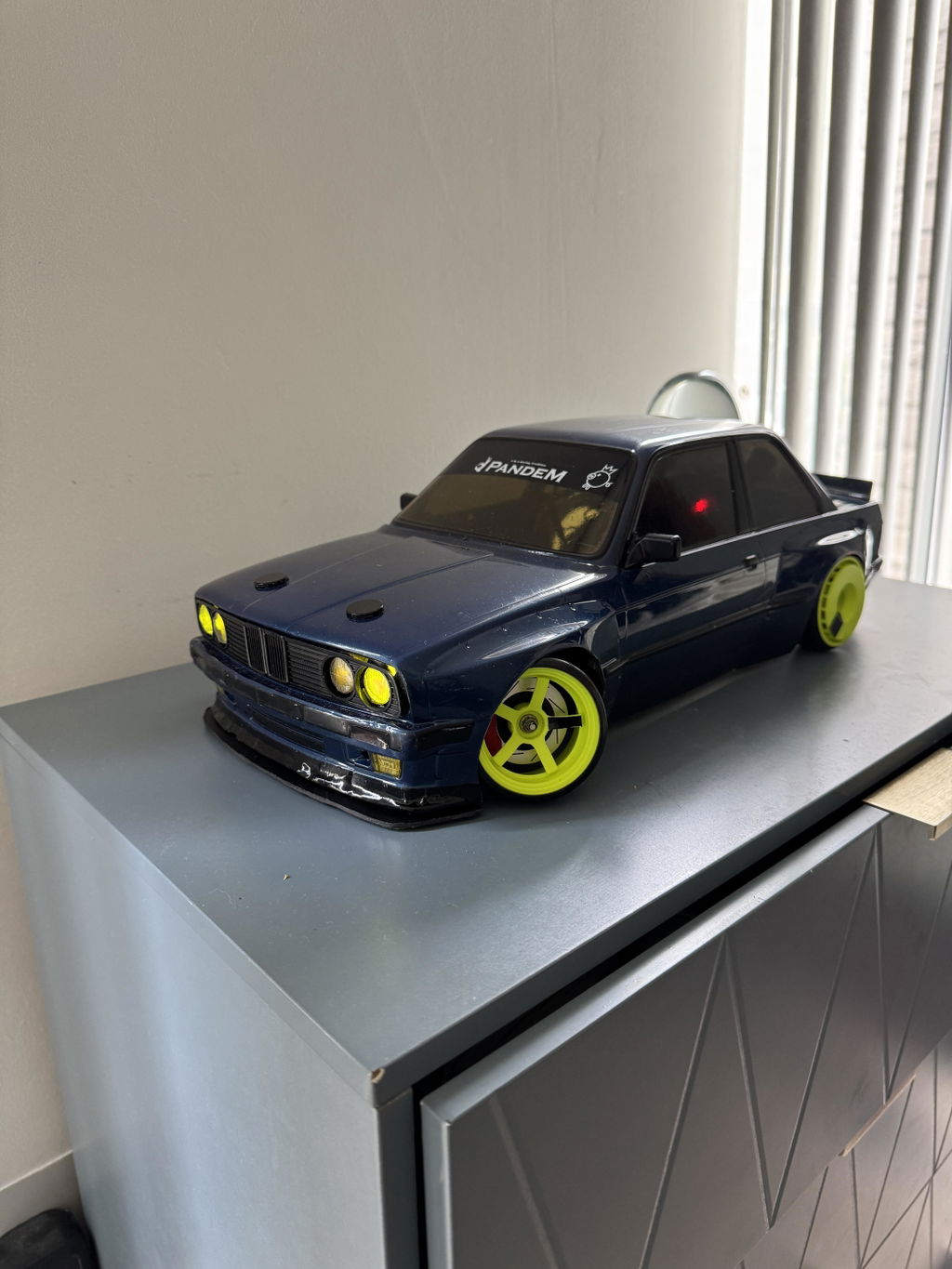
RC Drifting - The Thrilling World of Precision, Passion, and Style
What Actually Makes RC Drifting Different
RC drifting isn't about who gets round the track fastest. It's about control, style, and how close you can run to another car without breaking the slide. If you've only ever raced RC cars before, that's the biggest mental shift: throttle and steering aren't there to win a lap, they're there to hold an angle.
It started in Japan in the 1990s, growing directly out of full-size drifting culture, and it's stayed true to that root ever since. Setups, chassis, and even the way drivers talk about their cars still carry that JDM influence, whether it's a widebody Silvia shell or a chassis tuned for a specific track surface.

Why It's Different From Racing an RC Car
- Grip is the enemy, not the goal, drift tyres are built to slide predictably rather than hook up
- Tandem driving, running two cars close together in a drift, is as much a skill as solo lines
- Chassis setup focuses on steering angle and weight balance over raw speed
- Community and style count for a lot, it's as much about how you drift as how fast
The Chassis Behind the Hobby
Most RC drift chassis on the market today trace back to a handful of well proven platforms. The MST RMX series has become one of the most popular RC drift chassis for exactly this reason, adjustable, easy to maintain, and forgiving enough for a first build. Yokomo's RD2.0 takes a similar approach at entry level, while their YD-2 platform and the Reve D RDX sit further up as the setups you'll see at competition level, where every degree of steering angle and every gram of weight distribution has been fought over.
You don't need to know the difference between them on day one. But understanding that these platforms exist, and that each has its own character, helps make sense of why two drift cars that look similar can feel completely different to drive.

Getting Started
If you're completely new to this, the honest starting point is understanding the core components before you buy anything. Our Beginner's Guide to RC Drift Cars covers chassis types, electronics, and setup basics without assuming prior knowledge. Once you've got a car, tyre choice makes the single biggest difference to how it feels, our RC Drift Wheels & Tyres Guide explains why.
Where To Actually Drift
A smooth, low grip surface matters more than most beginners expect, tarmac or high grip flooring makes a drift car nearly impossible to control. If you're in West Yorkshire, our indoor track in Liversedge runs weekly Thursday sessions and a monthly open day, no booking required, just turn up.
RC drifting rewards patience more than any other RC discipline. Get the basics right and the rest starts to click.
Frequently Asked Questions
Is RC drifting hard to learn?
Not as hard as it looks, but it does take longer to feel natural than RC racing does. Most beginners find the biggest hurdle is unlearning the instinct to lift off the throttle mid corner, since drifting relies on maintaining throttle through the slide rather than braking into it. Expect a few sessions before it starts to click.
What's the difference between RWD (rear wheel drive) and 4WD drift chassis?
RWD chassis are the standard for serious RC drifting, they're harder to learn on but give a far more realistic, controllable slide once you're used to them. 4WD setups grip more and slide less predictably, which is why most dedicated drift chassis, including the MST RMX and Yokomo RD2.0, are built RWD only.
Do I need a special surface to drift on?
Yes, ideally. High grip surfaces like bare tarmac or grippy flooring make it very difficult to break traction and hold a slide. Polished concrete, laminate, or a dedicated low grip surface like our epoxy resin track works far better.
How much does it cost to get started with RC drifting?
A ready to run car gets you drifting straight away and is the cheaper entry point. A kit built chassis costs more upfront and needs assembly, but gives you a better understanding of your car and more room to upgrade later. Either route, budget for spare tyres early, they wear faster than you'd expect while you're learning.
Can I use a normal RC car for drifting?
Not really. Standard RC cars are set up to maximise grip, which works against everything drifting needs. Drift specific tyres, chassis geometry, and often a gyro are what make controlled sliding possible.