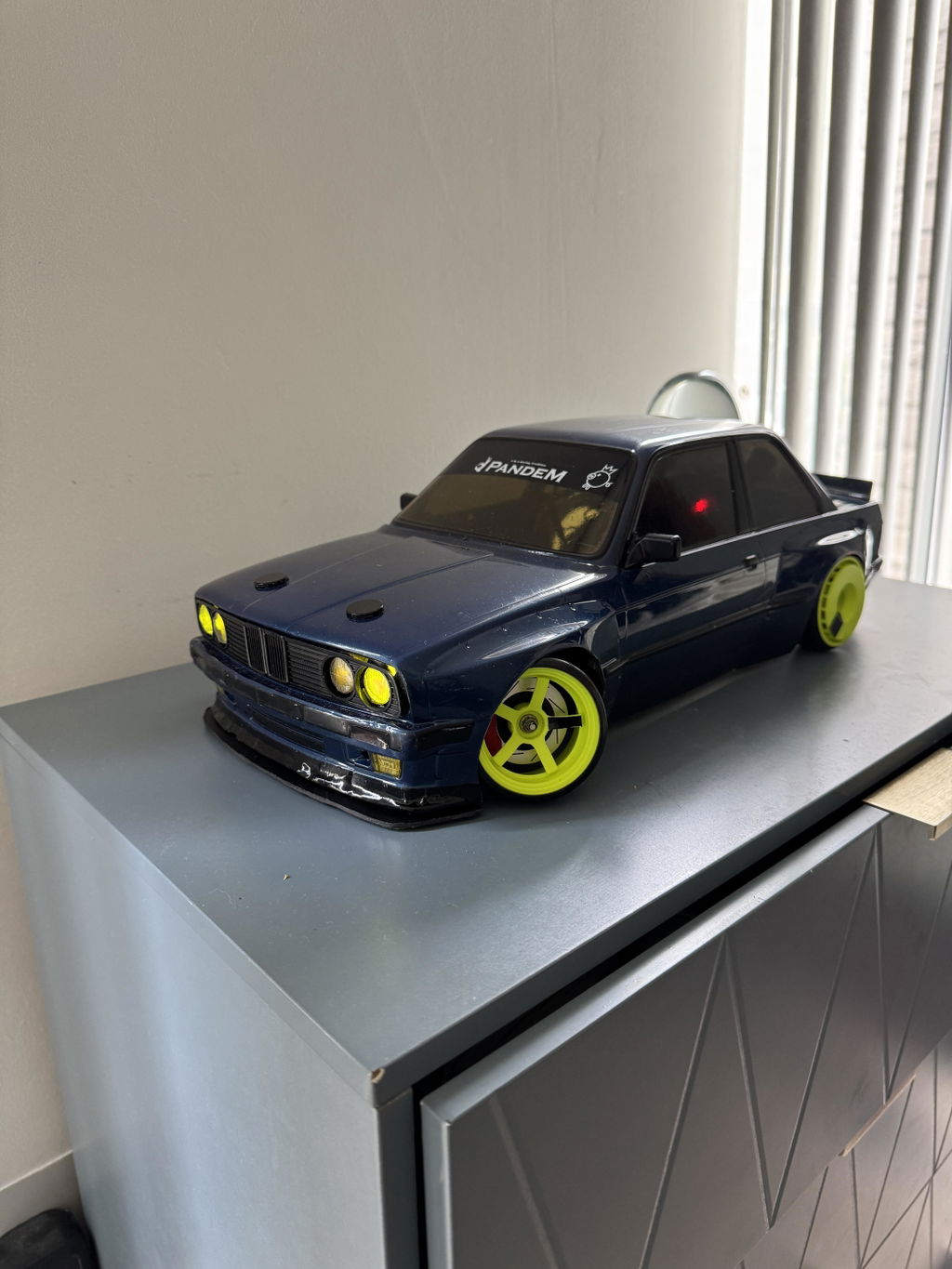
RC Drift Car Tips: Guide for Beginners and Enthusiasts
RC Drift Car Tips That Actually Matter
Most beginner mistakes in RC drifting come down to a handful of things: wrong surface, wrong tyres, or a setup that's fighting the driver rather than helping them. Here's what's worth getting right early, rather than learning the hard way.

1. Match Your Tyres To Your Surface
Tyre compound has a bigger effect on how your car feels than almost anything else you can change. A compound that's perfect on polished concrete can feel completely uncontrollable on carpet or laminate. If you're not sure what you're running on, our RC Drift Tyres collection breaks options down by surface type.
2. Don't Skip Wheel Offset
Offset changes your car's track width and how the wheels sit under the body shell, get it wrong and you'll either rub the shell or lose stability mid drift. Adjustable offset wheels are the easiest way to fine tune this without committing to a fixed spec while you're still learning your car. Our RC Drift Wheel Offset Explained guide covers this in plain terms.
3. Set Up Your Chassis Before You Blame The Car
A lot of "my car won't drift properly" issues are actually setup issues, steering angle, camber, and ride height all affect how predictable a slide feels. This applies whether you're running an MST RMX, a Yokomo RD2.0, or anything in between, the platform matters less than getting the fundamentals dialled in. Before swapping parts, it's worth checking your basic setup against our RC Drift Chassis & Suspension Guide.

4. Electronics Matter More Than You'd Think
Throttle response and steering precision come from your motor, ESC, and servo working together properly, not just from the chassis. If you're chasing smoother transitions and can't work out why, this is often where to look. Our RC Drift Car Electronics Guide explains how the pieces fit together.
5. Get Track Time, Not Just Setup Time
No amount of reading replaces actually running the car. Seat time is what builds the muscle memory for counter steer and throttle control that no setup change can substitute for.
Take these one at a time rather than changing everything at once, it's much easier to tell what's actually made a difference.
Frequently Asked Questions
Why does my RC drift car spin out on corners?
This is almost always either too much front end grip, too little steering angle, or throttle input that's too aggressive for the surface. Start by checking your tyre compound suits the surface, then look at steering angle before assuming anything's broken.
How often should I replace RC drift tyres?
Longer than most beginners expect but the surface you're drifting on plays a key factor. Drift tyres are designed to slide, which wears them faster than grip tyres on a racing car. Heavy track use can wear a set down within a few sessions, it's worth keeping at least one spare set on hand.
What offset should I start with as a beginner?
A neutral, mid range offset is the safest starting point, usually around 7mm, extreme offsets look aggressive but can hurt steering geometry and handling until you understand how offset affects your specific chassis. Adjustable offset wheels let you experiment without committing to several sets of RC wheels.
Do I need a gyro to drift?
Yes, most drivers find it makes a noticeable difference to control, especially during transitions and tandem runs.
Why does my car feel different to a friend's, even with the same chassis?
Setup differences, tyre wear, and even battery weight all affect how a drift car feels, two identical chassis rarely drive the same once they've been set up individually. This is normal, and part of why fine tuning matters as much as the base platform.